
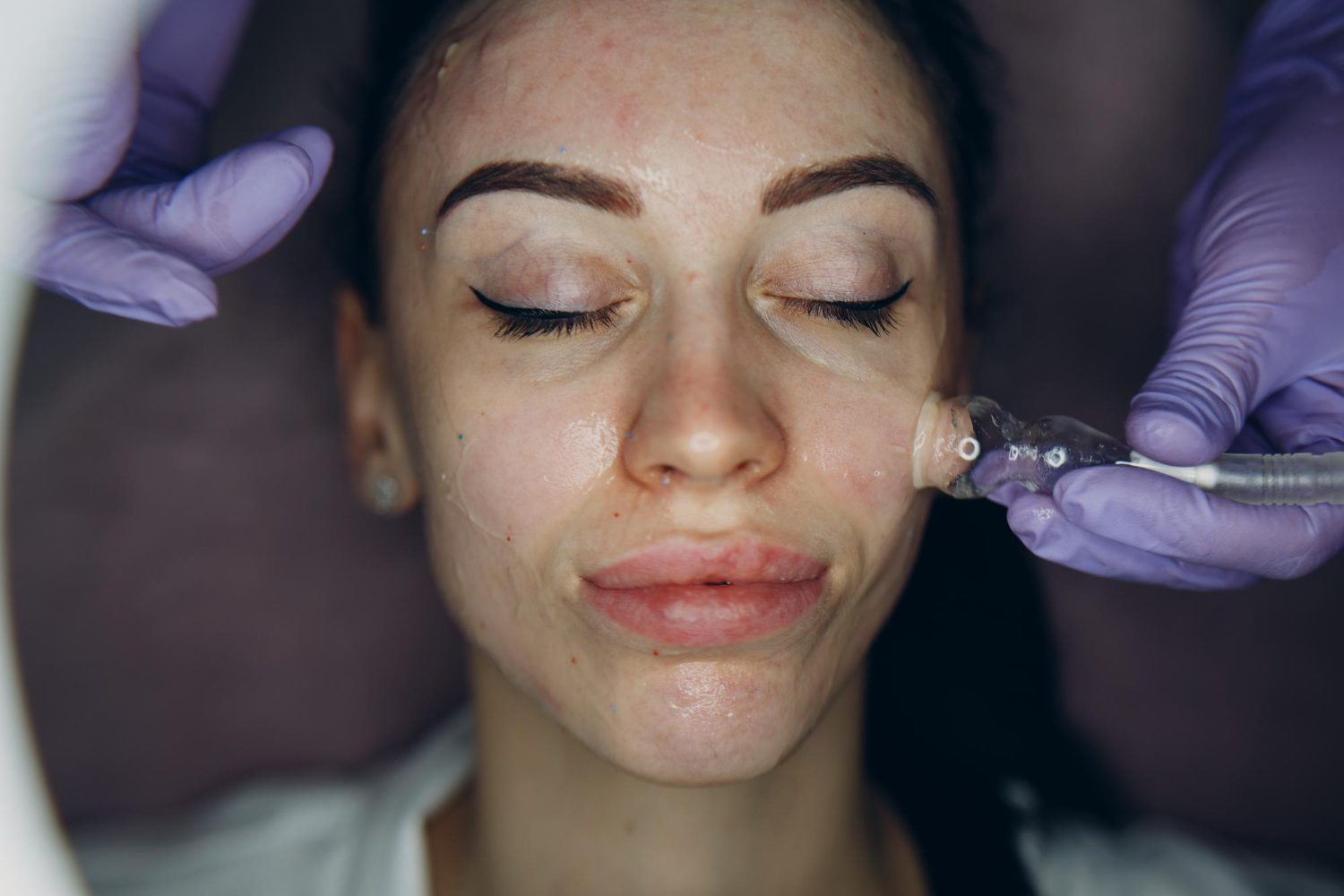
Acne may clear, but depressed or uneven scars can remain long after active breakouts are gone. If you are researching RF microneedling for acne scars, you may be wondering whether it can improve your skin texture, how many treatments you may need, and what risks to consider.
RF microneedling combines very small needles with controlled radiofrequency energy. The treatment is designed to stimulate the skin’s healing response and collagen remodeling below the surface.
For some people with acne scarring, this may gradually make scars less noticeable and improve overall texture. It does not guarantee complete scar removal, and the right treatment depends on your scar type, skin, medical history, and treatment goals.
RF microneedling may improve the appearance of certain acne scars by stimulating collagen remodeling and improving support within treated skin.
The American Academy of Dermatology explains that radiofrequency microneedling combines RF energy with microneedling and may make acne scars less noticeable.
Results develop gradually rather than immediately. For many patients, treatment involves a series of sessions followed by time for collagen remodeling.
Microneedling creates controlled treatment channels using tiny needles. RF microneedling adds radiofrequency energy, producing controlled heat within targeted tissue.
This combination can stimulate a healing response and new collagen formation. Over time, that remodeling may help improve:
At H-Bling Wellness in Brea, Radio-Frequency + Microneedling is offered as one of the center’s aesthetic skin treatments.
Acne scars are not all the same, so identifying the scar type is important before choosing a procedure.
Rolling scars create broader, shallow depressions that can give the skin a wavy appearance.
Boxcar scars are depressed scars with more defined edges. Their depth can vary considerably.
Ice-pick scars are narrow and deeper. Some deep scars may require another treatment or a combination approach rather than RF microneedling alone.
Raised acne scars involve excess scar tissue rather than lost tissue and generally require a different treatment strategy.
A qualified healthcare provider should evaluate the type, depth, and distribution of your scars before recommending treatment.
Both procedures use small needles to stimulate the skin’s repair process, but RF microneedling also delivers radiofrequency energy.
Traditional Microneedling | RF Microneedling |
Uses controlled needle penetration | Combines microneedling with RF energy |
Stimulates collagen remodeling | Adds controlled heating to targeted tissue |
Commonly used for texture and scars | May provide additional tissue remodeling |
Treatment depth can be adjusted | Needle depth and RF settings may be adjusted |
RF microneedling is not automatically better for everyone. Scar type, skin characteristics, previous treatments, risks, and treatment goals should guide the decision.
Treatment generally begins with a consultation and skin assessment.
A typical appointment may include:
Treatment settings vary between patients and devices.
There is no universal number of sessions.
H-Bling Wellness currently describes its RF microneedling service as a series of at least three treatments. Your actual treatment plan should be based on your scar type, skin response, goals, and provider assessment.
Factors that can influence the number of sessions include:
More treatment does not automatically mean better results.
RF microneedling results develop progressively as collagen remodeling occurs.
Some changes may become noticeable within weeks, while improvement can continue for several months. Cleveland Clinic notes that the best RF microneedling results are often seen approximately three to six months after the first treatment.
The realistic goal is usually improvement in scar visibility and skin texture, not perfectly smooth or scar-free skin.
Downtime varies according to your skin and treatment intensity.
Temporary effects can include:
Some people resume routine activities relatively quickly, while visible redness or sensitivity may last longer.
Follow your own provider’s aftercare instructions rather than relying on a universal recovery timeline.
Recently treated skin may be more sensitive.
Your provider may recommend:
The FDA notes that recently microneedled skin can become more sensitive to products including retinol, glycolic acid, cosmetics, moisturizers, and sunscreen.
RF microneedling should be treated as a medical procedure, and no medical aesthetic procedure is risk-free.
On October 15, 2025, the U.S. Food and Drug Administration issued a safety communication regarding serious complications reported with certain uses of RF microneedling devices.
Reported complications have included burns, scarring, fat loss, nerve damage, disfigurement, and injuries requiring medical or surgical treatment.
The FDA recommends choosing a licensed healthcare provider with training and experience using RF microneedling devices and asking which device will be used.
RF microneedling devices may be FDA cleared for specific indications. This should not be confused with claiming that every RF microneedling procedure, setting, combination, or result is “FDA approved.”
RF microneedling is not appropriate for everyone.
Extra caution or postponement may be needed for people with factors such as:
Tell your healthcare provider about medications, supplements, allergies, skin conditions, and previous procedures before treatment.
Do not stop prescription medication on your own.
The American Academy of Dermatology states that radiofrequency microneedling can be used across skin tones.
However, this does not mean treatment is risk-free. Settings, treatment depth, aftercare, and individual susceptibility to pigmentation changes should still be considered.
A personalized skin assessment is more useful than making a treatment decision based only on a general skin-tone category.
RF microneedling and laser procedures work differently.
Laser treatments use light-based energy to resurface or remodel skin, while RF microneedling delivers radiofrequency energy through microneedles into targeted tissue.
Neither treatment is universally better.
Different acne-scar patterns can respond differently, and some people benefit from a combination of treatments.
The better question is:
Which treatment best matches my scar type, skin, medical history, and goals?
H-Bling Wellness offers RF microneedling in Brea, California, for people considering treatment for concerns such as acne scarring and uneven skin texture.
A consultation can help determine:
Choosing a personalized treatment plan is more important than simply choosing the strongest available setting.
No treatment should be presented as a guaranteed way to permanently erase acne scars. RF microneedling may make certain scars less noticeable by improving collagen remodeling and skin texture.
Treatment plans vary. H-Bling Wellness currently describes its approach as a series of at least three treatments, but your provider should determine the appropriate number for you.
Improvement develops gradually. Collagen remodeling may continue for months, with fuller results often becoming apparent several months after treatment begins.
Complications are possible with any procedure that intentionally treats the skin. The FDA has reported serious complications with certain uses of RF microneedling devices, which is why provider training, appropriate settings, device selection, and aftercare matter.
Not automatically. RF microneedling adds radiofrequency energy, while traditional microneedling does not. The appropriate choice depends on your scars, skin, risks, previous treatments, and goals.
This article focuses on acne scars, not treatment of active inflammatory acne. If you still have significant breakouts, ask a qualified healthcare provider whether active acne should be controlled before scar-focused procedures.
RF microneedling may be a useful option for improving certain acne scars and uneven skin texture, but it is not the right treatment for every scar or every person.
Before treatment, understand your scar type, expected results, possible risks, the device being used, who will perform the procedure, and whether other treatments should be considered.
If you’re considering RF microneedling for acne scars in Brea, CA, contact H-Bling Wellness to discuss your skin concerns and whether an individualized treatment plan may be appropriate.
H-Bling Wellness
1027 E Imperial Hwy
Brea, CA 92821
714-674-0242