
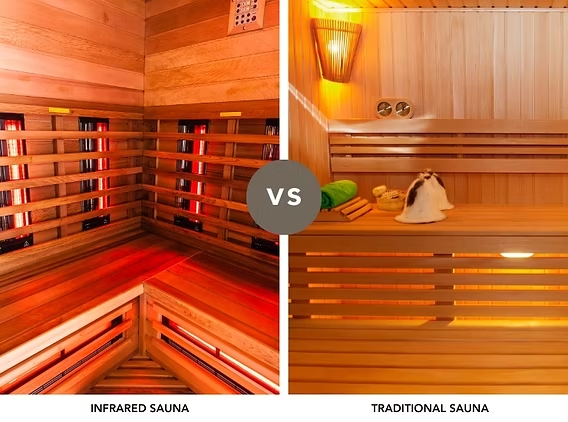
If you’ve ever stood in the health and wellness aisle of life and found yourself Googling “infrared sauna vs regular sauna,” you’re not alone. As sauna therapy has moved from niche biohacking circles into mainstream wellness culture, more people are asking a very reasonable question: What’s the actual difference, and which one is better for me?
The short answer is: it depends on your goals, your comfort level, and how your body responds to heat. The longer answer involves understanding how each type of sauna works, what happens to your body during a session, and what the research and wellness community says about their respective benefits.
Whether you’re exploring sauna therapy for the first time or you’re a seasoned steam-lover curious about switching to infrared, this guide will walk you through everything you need to know, clearly, honestly, and without exaggerated promises.
A traditional sauna, sometimes called a Finnish sauna, dry sauna, or steam sauna depending on its configuration, has been used for thousands of years, originating in Scandinavian cultures where it served both hygienic and ritualistic purposes. Today, you’ll find traditional saunas in gyms, spas, and wellness centers worldwide.
Traditional saunas heat the air inside the cabin using one of several methods:
The heated air then warms your body from the outside in. Temperatures in a traditional sauna typically range from 150°F to 195°F (65°C to 90°C), and humidity can be adjusted by pouring water over hot sauna stones, a practice that generates bursts of steam called löyly in Finnish tradition.
At these high temperatures, your body responds quickly. Heart rate increases, blood vessels dilate, and you begin to sweat, often profusely. The experience can feel intense, particularly for newcomers who aren’t accustomed to high-heat environments.
An infrared sauna is a newer form of heat therapy that uses infrared light waves, the same type of gentle, invisible warmth you feel from sunlight on your skin, to heat the body directly, rather than heating the surrounding air first.
Instead of hot stones or electric coils heating a closed room to extreme temperatures, infrared saunas use infrared emitters (typically carbon or ceramic panels) mounted inside the sauna cabin. These panels emit infrared light that is absorbed directly by the skin and underlying tissues, raising your core body temperature from the inside out.
Because infrared heat penetrates more deeply into the body’s tissues, some sources suggest up to 1.5 inches below the skin’s surface, the body responds with a significant sweat response at much lower ambient temperatures. Infrared saunas typically operate between 120°F and 150°F (49°C to 65°C), which is 30–50 degrees cooler than a traditional sauna.
There are three types of infrared light used in sauna therapy:
Full-spectrum infrared saunas use all three. Many commercial infrared saunas, including those designed for wellness and recovery, focus primarily on far-infrared wavelengths.
Understanding the differences between these two modalities helps you make an informed decision about which experience better aligns with your wellness goals.
The most obvious difference is temperature. Traditional saunas can reach nearly 200°F, creating an intensely hot environment. Infrared saunas operate at lower temperatures, typically between 120°F and 150°F, but the body still responds with significant warmth and sweating because the heat is penetrating tissue directly rather than just warming the air around you.
This distinction matters for comfort. Many people who find traditional saunas overwhelming or difficult to breathe in report that infrared saunas feel far more tolerable, even pleasant, because the air itself stays cooler.
In a traditional sauna, heat warms the outer layers of skin and triggers a thermal response. In an infrared sauna, the radiant heat is absorbed more deeply, reaching muscles, joints, and connective tissue more directly. This is one reason infrared saunas are often discussed in the context of muscle recovery and pain relief; the heat reaches areas that surface-level warmth may not affect as thoroughly.
Both sauna types induce sweating, but the nature of that sweat differs. Traditional saunas trigger rapid, intense surface sweating due to extreme environmental heat. Infrared saunas tend to produce a slower, deeper sweat that many users describe as feeling more thorough, though it’s important to note that sweat volume alone is not a reliable measure of detoxification quality.
Traditional sauna sessions often last 10–20 minutes before a cooldown break is needed. Infrared sessions are typically 20–45 minutes long and feel more sustainable because of the lower ambient temperature. First-time sauna users often find infrared sessions easier to complete comfortably.
Traditional saunas require longer preheat times (30–60 minutes) and more energy to reach operating temperature. Infrared saunas heat up in roughly 10–15 minutes and are generally more energy-efficient.
Feature | Infrared Sauna | Regular (Traditional) Sauna |
Heat Source | Infrared light panels | Electric heater, wood stove, or gas |
Temperature Range | 120°F – 150°F | 150°F – 195°F |
How is the body heated | Directly, via infrared penetration | Indirectly, via hot air |
Depth of Heat | Deeper tissue penetration | Surface-level and skin |
Comfort Level | Higher, cooler air, gentler feel | Lower, intense heat, harder to breathe |
Sweat Response | Slower onset, deep sweat | Rapid, intense surface sweat |
Session Length | 20–45 minutes | 10–20 minutes per round |
Preheat Time | 10–15 minutes | 30–60 minutes |
Muscle Recovery | Strong support via deep heat | Moderate support |
Stress Relief | High, relaxed, meditative experience | High, endorphin rush from heat |
Skin Health Support | Yes, circulation, sweating | Yes, sweat and circulation |
Beginner Friendliness | Very beginner-friendly | Can be overwhelming at first |
Best For | Recovery, relaxation, skin, detox support | Heat conditioning, tradition, intense sweat |
The growing interest in infrared sauna therapy isn’t without reason. A wide range of wellness benefits are associated with regular infrared sauna use, though it’s important to note that individual results vary based on factors like session frequency, hydration, health status, and overall lifestyle.
One of the most commonly cited infrared sauna benefits is its potential role in detox support. Sweating is one of the body’s natural processes for eliminating certain waste products. Because infrared heat may promote deeper, more prolonged sweating compared to surface-level warmth, many wellness practitioners suggest it could support the body’s natural detoxification processes.
Important note: Infrared sauna is not a medical treatment for toxin exposure, and it should not replace conventional medical care. If you have concerns about specific toxins or health conditions, consult a qualified healthcare professional.
Athletes, fitness enthusiasts, and anyone dealing with muscle soreness often turn to an infrared sauna for recovery support. The deep, penetrating heat may help increase circulation to muscle tissue, reduce tension, and support the body’s natural repair processes after exercise. Many users report feeling looser and less sore after consistent infrared sauna use as part of a recovery routine.
Heat therapy has long been associated with pain management. An infrared sauna may offer potential relief for muscle aches, joint stiffness, and general tension by promoting blood flow and relaxing tight tissues. This does not mean infrared sauna treats underlying medical conditions, but for many people, it’s a useful complementary tool in a broader wellness plan.
The combination of deep sweating, improved circulation, and increased core body temperature may contribute to skin health over time. Regular infrared sauna use is often associated with a temporary improvement in skin tone, texture, and radiance, as sweating can help clear pores and support circulation to the skin’s surface.
The infrared sauna environment, warm, quiet, and free from daily distractions, creates a natural setting for stress relief. Many users report significant improvements in mood, mental clarity, and overall sense of calm following a session. The gentle heat may also support the body’s parasympathetic nervous system, helping shift from a stress response toward a relaxed state.
Infrared sauna may support weight management as part of a comprehensive wellness routine. During a session, the body works to regulate its temperature, which requires energy expenditure. Some people incorporate infrared sauna into their metabolism support strategy, alongside nutrition and regular exercise, not as a standalone weight loss solution, but as a complementary practice that may support caloric burn and circulation.
Results vary significantly by individual, and infrared sauna alone is not a substitute for healthy eating and physical activity.
Traditional saunas offer their own set of well-documented wellness benefits and have the advantage of centuries of use.
Research from Finnish populations, where sauna use is deeply embedded in culture, suggests that regular traditional sauna use is associated with improved cardiovascular health markers. The rapid heart rate increase experienced during a high-heat session has been compared to a low-intensity aerobic workout.
For those who enjoy the intense experience of extreme heat, traditional saunas deliver an unmatched level of thermal challenge. Regular heat conditioning may improve heat tolerance and has been used by athletes as a performance preparation tool.
Traditional saunas, particularly Finnish and Nordic-style ones, are often communal experiences with deep cultural significance. The social dimension of traditional sauna bathing is a unique benefit that infrared sauna, typically a solo or small-group experience, doesn’t replicate in the same way.
The intense heat of a traditional sauna often triggers a noticeable endorphin release, giving many users a euphoric or deeply relaxed feeling after stepping out and cooling down.
Both types of sauna support the body’s natural detoxification pathways through sweating, but the infrared sauna is generally considered more efficient for this purpose. Because infrared heat penetrates deeper into tissues, it may promote a more thorough sweat response at lower temperatures, making longer sessions more manageable.
It’s worth repeating that sweating is just one of the body’s detox mechanisms (the liver and kidneys handle the heavy lifting), so sauna therapy is best understood as a supporting practice rather than a primary detox treatment. Hydration before, during, and after sessions is essential, dehydration will undermine any potential benefit and can be dangerous.
Infrared sauna has a meaningful advantage here. The ability of infrared heat to penetrate muscle tissue directly, rather than warming muscles indirectly through hot air, makes it a compelling option for post-workout recovery. The deeper heat can help relax muscle fibers, improve circulation to sore areas, and ease the kind of tension that accumulates after intense training.
Traditional saunas offer heat therapy as well, but the shorter tolerable session lengths and less targeted penetration make them slightly less effective for targeted muscle recovery.
Both types of sauna excel at stress relief, but for different reasons. Traditional saunas offer an intense, almost meditative experience followed by a dramatic cooling contrast, a pattern that many people find deeply calming. The endorphin spike from high heat is real and often significant.
Infrared saunas, however, offer a more sustained and accessible relaxation experience. The lower ambient temperature means you can stay in longer, breathe comfortably, and settle into a genuine state of calm without fighting the heat. For people with anxiety or sensory sensitivity, an infrared sauna’s gentler environment is often more effective for actual stress reduction.
Neither sauna type is a weight loss treatment. Any immediate weight reduction after a sauna session is almost entirely water weight from sweating, which returns once you rehydrate. That said, both types of sauna may modestly support caloric expenditure during a session.
Infrared sauna has a slight edge because longer session lengths are more sustainable, meaning more time in a thermogenic state. Some practitioners suggest infrared sauna as a complementary practice alongside regular exercise and a balanced diet, not as a standalone weight management tool.
Infrared sauna has the advantage for skin health. The deep sweating helps clear pores more thoroughly, and the improved circulation associated with infrared heat can support a healthy glow and overall skin tone over time. Some users report improvements in skin texture with consistent use.
Traditional saunas also support skin health through sweating and circulation, but the shorter sessions and less deep penetration give infrared a slight edge here.
This is where the infrared sauna wins decisively. The lower ambient temperature means you’re not fighting to breathe in superheated air, making it far more approachable for anyone new to sauna therapy. Many first-timers who try traditional saunas and find them overwhelming go on to have excellent experiences with infrared saunas.
The longer, more gradual warmth of an infrared session gives your body time to adapt, sweat naturally, and settle into a relaxed state, without the shock of extreme heat that can make traditional sauna uncomfortable or even unsafe for some individuals.
If you’re planning to try an infrared sauna for the first time, particularly if you’re looking into infrared sauna in Brea, CA, here’s what a typical session looks like:
Session frequency matters more than any single session. One intense sauna experience is unlikely to produce lasting benefits; consistency over time is what tends to make the difference.
General guidance from wellness professionals:
As with any wellness practice, results depend on individual health status, hydration levels, lifestyle factors, and how consistently sessions are maintained. Always listen to your body, and consult a healthcare professional if you have any underlying conditions before starting a regular sauna routine.
Sauna therapy is generally well-tolerated by healthy adults, but certain individuals should consult their doctor before beginning:
An infrared sauna is not a medical treatment, and this article is not a substitute for individualized medical advice. When in doubt, check with a qualified healthcare provider.
For residents of Brea and the surrounding Orange County area, access to professional infrared sauna services has never been more convenient. Whether you’re in Brea, Fullerton, Yorba Linda, Placentia, La Habra, or neighboring communities, you can access a dedicated infrared sauna experience without the commute to Los Angeles.
H-Bling Wellness, located at 1027 E Imperial Hwy in Brea, CA, offers infrared sauna sessions designed to support detoxification, relaxation, muscle recovery, and overall wellness. Conveniently situated in Orange County, it serves clients seeking a professional, welcoming environment for heat therapy and holistic recovery.
If you’ve been searching for an infrared sauna near me in the Brea, Fullerton, or greater Orange County area, a locally accessible wellness studio offers clear advantages: no lengthy commutes before or after sessions, familiarity with the local health community, and the ability to build a consistent routine without logistical friction.
Consistency, as we’ve discussed, is one of the most important factors in getting meaningful results from infrared sauna therapy.
You don’t need a special occasion or a specific wellness crisis to start exploring infrared sauna therapy. Some of the most common reasons people book their first session include:
H-Bling Wellness in Brea, CA, offers an infrared sauna as part of a broader wellness menu. To learn more about scheduling, session options, and what to expect, visit https://h-bling.com/infrared-sauna/ or call 714-674-0242.
The infrared sauna vs regular sauna debate doesn’t have a single universal answer, because the best sauna for you depends on what you’re hoping to achieve, how your body responds to heat, and what kind of experience you find sustainable and enjoyable.
That said, for most wellness goals, especially detox support, muscle recovery, skin health, stress relief, and beginner accessibility, the infrared sauna holds meaningful advantages over its traditional counterpart. The lower operating temperatures, deeper heat penetration, longer sustainable session lengths, and gentler comfort profile make it the preferred choice for a wide range of people.
If you’re in the Brea, CA area and curious about experiencing infrared sauna therapy for yourself, the most important step is simply to start. One session is enough to understand the experience. A consistent routine is what builds the results.
For questions, booking information, or to learn more about complementary wellness services, reach out to H-Bling Wellness at recover@h-bling.com or visit the website at h-bling.com.
Results vary by individual. Infrared sauna therapy is not a substitute for professional medical care. Always consult a qualified healthcare provider if you have concerns about a medical condition.
The primary difference is how heat is delivered. A regular (traditional) sauna heats the air around you to very high temperatures (150°F–195°F), which then warms your body from the outside. An infrared sauna uses infrared light to heat your body directly, penetrating deeper into tissues at much lower ambient temperatures (120°F–150°F). This makes the infrared sauna feel more comfortable while still producing a significant sweat response.
For most wellness goals, including muscle recovery, detox support, skin health, and beginner comfort, an infrared sauna has notable advantages. Traditional saunas excel in intense heat conditioning and cultural experience. The “better” choice depends on your specific goals and personal preferences.
Infrared sauna may support the body’s natural detoxification processes by promoting deep, sustained sweating. Sweating is one of the ways the body eliminates certain waste products. However, an infrared sauna is not a medical detox treatment, and the liver and kidneys remain the primary detox organs. Staying well-hydrated is essential to maximize any potential benefit.
Infrared sauna may contribute modestly to caloric expenditure during sessions, as the body works to regulate its temperature. However, any immediate weight loss after a session is primarily water weight from sweating. Infrared sauna is best used as a complementary wellness practice alongside a balanced diet and regular exercise, not as a standalone weight loss solution.
Beginners typically benefit from 1–2 sessions per week at 20–30 minutes each. As you build tolerance and consistency, 3–4 sessions per week at 30–45 minutes is a common recommendation for ongoing wellness support. Individual factors like health status, hydration, and lifestyle all influence how frequently you should use an infrared sauna.
An infrared sauna is generally considered safe for healthy adults when used as directed. However, individuals who are pregnant, have cardiovascular conditions, take certain medications, or have heat sensitivity disorders should consult a healthcare professional before beginning. Sessions should always be paired with adequate hydration, and you should listen to your body and exit if you feel dizzy, nauseous, or unwell.
Before: Hydrate well, drink at least 16–24 oz of water before your session. Avoid heavy meals immediately beforehand. Wear comfortable clothing or bring a towel.
After: Continue drinking water to rehydrate. Take time to cool down gradually rather than immediately exposing yourself to cold. A cool shower is fine once your body temperature has normalized. Many people find rest or light activity (like stretching or walking) helpful after a session.